
Ads
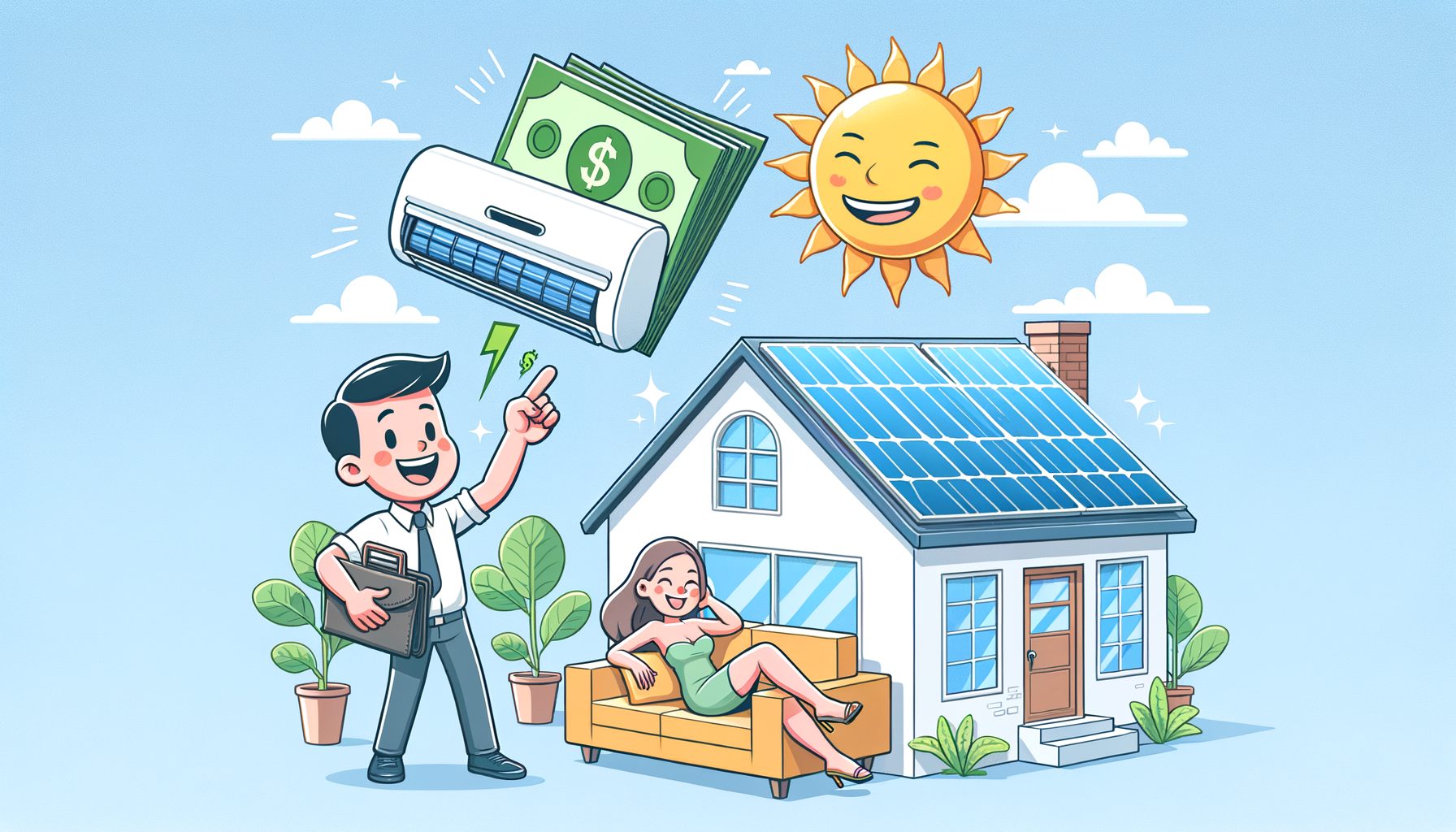
Solar-powered air conditioners promise lower bills, cleaner energy, and cooling that keeps working when the grid is stressed. Feeling the pinch from rising summer heat and electricity costs? This guide lays out the benefits of solar-powered air conditioners in clear, practical steps. You’ll see how the systems work, what they cost, how much you can save, and how to get started confidently—even if you’ve never touched solar before.
Ads
Why cooling is expensive—and how solar-powered air conditioners change the equation
Air conditioning is considered essential comfort, yet it can be painfully expensive. Heat waves are getting longer and more intense, and cooling demand is growing globally. According to the International Energy Agency, space cooling already accounts for roughly 10% of global electricity use and is set to rise sharply as incomes and temperatures increase. The result is higher utility bills, more peak-load pressure on power grids, and more emissions where electricity is fossil-fueled. In short: you pay more, and the planet warms more.
Solar-powered air conditioners interrupt that cycle by producing a large share of the energy they need directly from sunlight. During hot, sunny hours—exactly when you run AC the most—rooftop or balcony solar panels generate power that can feed your air conditioner (and sometimes other home loads). The immediate effect is simple: you buy less electricity from the grid, which lowers your monthly bill. In areas with unstable grids, solar support can also keep your home cooler during peak demand or voltage dips.
There’s another benefit: efficiency, and it’s substantial. Modern solar-ready ACs often use inverter compressors and high SEER/SCOP ratings, meaning they sip power compared to older units. Pairing efficient AC hardware with solar generation compounds savings. Even partial solar coverage matters. If solar offsets 50–80% of your cooling energy during the day, that’s a meaningful cut to your summer costs. With incentives and smart design, many homeowners see a reasonable payback period and long-term, low-maintenance savings—without sacrificing comfort.
In short, solar-powered air conditioners give you more control: over costs, over comfort during heat spikes, and over your carbon footprint. That’s why the technology is moving from niche to mainstream in homes, small businesses, and off-grid cabins worldwide.
How solar-powered air conditioners work: types, tech, and real-world fit
Three common setups dominate solar-powered air conditioning, and understanding them makes choosing far easier.
1) Grid-tied AC plus rooftop solar: It’s the most common—and often the simplest—approach. You install a standard high-efficiency inverter AC (many are mini-splits) and a rooftop photovoltaic (PV) system. During the day, PV power reduces or eliminates the AC’s draw from the grid. At night, the unit runs on grid power. In many regions, exporting excess solar to the grid via net metering or feed-in tariffs is possible. That approach is flexible, uses standard components, and scales easily.
2) Hybrid solar AC (DC/AC): Some air conditioners are designed to accept direct current (DC) from solar panels and alternating current (AC) from the grid. On sunny days, the unit prioritizes PV and taps the grid only as needed. Conversion losses and wiring complexity can drop. The appeal is resilience and efficiency without full-home solar. The tradeoff: you must match panels to the unit’s DC input requirements and ensure high-quality installation.
3) Off-grid solar AC with batteries: In places without reliable electricity, a DC air conditioner connected to solar panels and a battery bank can run day and night. Because batteries add cost and complexity, this route makes the most sense where grid power is unreliable or unavailable, or where cooling is mission-critical (medical storage, critical rooms). Selecting an ultra-efficient unit and right-sizing the battery is key to keeping costs reasonable.
Across all setups, two technical choices matter most. First, pick high-efficiency hardware: inverter compressors, high SEER (for cooling), and high HSPF/SCOP (for heating if using a heat pump). Second, right-size your solar array based on your cooling load profile. A small apartment with an efficient 12,000–18,000 BTU mini-split might need ~1.5–2.5 kW of PV to offset most daytime cooling; a larger home or hotter climate might need 4–6 kW or more. Tools like NREL’s PVWatts can estimate production in your location: https://pvwatts.nrel.gov.
Real-world fit is about timing. Solar output peaks midday, which aligns with peak cooling demand in many climates. That synergy reduces your reliance on expensive peak electricity, helps the grid, and cuts bills when it matters most. Add a smart thermostat, shading, and good insulation, and you multiply the benefits—less energy in, more comfort out.
Costs, savings, and ROI: realistic numbers, incentives, and a quick example
What does it cost to run AC on solar, and how fast can it pay back? Numbers vary by country, electricity price, climate, and hardware quality, but a realistic mid-range example helps frame expectations.
Assume: a small home or apartment uses an 18,000 BTU inverter mini-split with SEER ~20. Annual cooling energy is ~1,500 kWh in a warm climate. Local electricity costs $0.20/kWh. A 2 kW PV array produces ~2,800 kWh/year in a sunny region (your output will vary—check PVWatts). Daytime solar overlaps with much of your cooling runtime, offsetting roughly 70% of the AC’s electricity annually in this scenario. Hardware costs: $1,800–$2,500 for the mini-split (installed) and ~$3,000–$4,500 for a 2 kW PV system (prices vary widely by market; DIY can be lower, turnkey can be higher). Incentives may reduce PV costs significantly. See your local database (e.g., U.S. incentives: https://www.dsireusa.org; global cost trends: https://www.irena.org/Statistics).
Assumptions for the table: grid carbon intensity ~0.45 kg CO2/kWh (varies by region), no battery, typical self-consumption alignment for daytime cooling. Consider it a guide—not a quote—to frame your own calculation.
| Item | Grid-Only Inverter AC | Hybrid: AC + 2 kW Solar |
|---|---|---|
| Upfront equipment (AC) | $2,200 | $2,200 |
| Upfront equipment (PV) | $0 | $3,600 |
| Annual AC electricity use | 1,500 kWh | 1,500 kWh |
| Solar production applied to AC | 0 kWh | ~1,050 kWh (70% of AC use) |
| Grid electricity for AC | 1,500 kWh | ~450 kWh |
| Annual AC electricity bill ($0.20/kWh) | $300 | $90 |
| Annual AC bill savings | — | $210 |
| Estimated CO2 avoided (AC use) | — | ~470 kg CO2/year |
| Simple payback on PV (from AC savings only) | — | ~17 years (faster with incentives and if PV offsets other loads) |
In practice, PV usually offsets more than AC. It also covers lighting, electronics, and appliances, which can lift total annual savings to $500–$1,000+ depending on system size and rates, shortening payback to 6–10 years in many markets. Incentives can shave 20–50% off PV costs and accelerate ROI further. Another hidden ROI: resilience. Reducing peak-time grid draw lowers the chance of outages and voltage issues, and in some regions, time-of-use rates mean your daytime solar saves you at the most expensive hours.
For better accuracy in your region, use PVWatts for solar yield, check your last 12 months of cooling energy (smart meter or bills), and compare local installed prices from at least three reputable providers. ENERGY STAR guidance for efficient AC selection is here: https://www.energystar.gov.
Step-by-step plan to adopt solar AC: from quick audit to smooth installation
Step 1: Audit your cooling load. Note the hottest rooms, typical thermostat settings, and monthly electricity costs in summer. If you have a smart meter or a plug-in energy monitor, track AC usage on a hot day. With that baseline, you can right-size both AC capacity and solar.
Step 2: Reduce easy wastes. Before buying hardware, fix basics: shade west-facing windows, seal obvious air leaks, add reflective film or curtains, and clean or replace filters. Small changes can cut load 10–20%, allowing a smaller (cheaper) AC and solar array without losing comfort.
Step 3: Choose the AC type. For most homes, an inverter mini-split is efficient, quiet, and flexible (zoned cooling). Look for high SEER ratings and reputable brands with strong warranties. If you’re off-grid or want a hybrid DC input, consider a DC-ready unit—but verify panel compatibility and installer experience.
Step 4: Size and site the solar. Use your audited cooling kWh and local solar yield to estimate array size. If roof space is limited, prioritize summer-optimized tilt and minimal shading. A 1.5–3 kW array can cover much of the daytime cooling in a small-to-medium home; larger homes or hotter climates may need 4–6 kW+ to offset broader loads.
Step 5: Get multiple quotes. Ask at least three installers for itemized bids that include equipment specs (module brand, inverter type, AC model), production estimates, warranties, and timeline. Compare not just price but service quality and references. Also ask about incentives, permitting, and interconnection support.
Step 6: Plan controls and comfort. Add a smart thermostat or the AC manufacturer’s app controls. Program efficient schedules, enable eco modes, and consider ceiling fans to feel cooler at higher setpoints. Smart controls often deliver 5–15% energy savings with zero comfort loss.
Step 7: Install, inspect, and maintain. Have a qualified technician commission the AC (vacuum lines, refrigerant checks, airflow balancing) and test solar production. Maintenance is simple: filters are cleaned monthly in peak season, outdoor coils kept clear, and solar panels rinsed if dust or pollen reduces output. Annual professional AC service helps preserve efficiency and longevity.
Step 8: Track and optimize. Use monitoring apps to track daily solar output and AC consumption. If your array consistently produces excess midday, consider shifting other loads (laundry, EV charging) to daytime for better self-consumption. Over time, those habits lock in bigger savings. Well, here it is: the data will guide your tweaks.
FAQs: quick answers to common questions about solar-powered air conditioners
Q1: Do I need batteries to run a solar-powered air conditioner? A: No. Most homes pair a high-efficiency AC with a grid-tied solar array and no batteries. During the day, solar offsets the AC’s consumption; at night, the unit runs on the grid. If you want night cooling during outages, you’ll need a battery or a hybrid DC system with storage, but that adds cost. For many users, grid-tied solar without batteries offers the best value.
Q2: Can solar really cover my cooling on hot afternoons? A: Often, yes. Solar output typically peaks when the sun is strong, which is also when cooling demand is highest. If your array is sized to match your AC’s peak power draw and your roof has good sun exposure, solar can cover most or all of the daytime cooling. Cloudy weather and shoulder hours reduce coverage, but annual savings remain substantial.
Q3: What if my roof is small or shaded? A: You still have options. Use high-efficiency panels, optimize tilt/azimuth, or consider a carport or ground mount if permitted. You can also right-size a smaller array that covers a portion of your cooling—partial offset still saves money. In some buildings, balcony or facade mounts are possible with microinverters; always confirm local code and wind-load rules.
Q4: How do I estimate savings in my country? A: Start with last year’s summer bills to estimate cooling kWh, or use a smart plug to measure your AC for a week of hot weather. Then, estimate solar production with PVWatts (global coverage): https://pvwatts.nrel.gov. Multiply the expected self-consumed kWh by your local kWh price for a first-pass savings estimate. Check local incentives via your government energy office or databases like DSIRE (U.S.): https://www.dsireusa.org.
Q5: Will solar AC reduce my carbon footprint meaningfully? A: Yes, especially if your grid is fossil-heavy. Every kWh you replace with solar reduces emissions. The International Renewable Energy Agency reports that solar PV has a very low lifecycle carbon intensity compared to fossil generation. Over 20–25 years, even a modest residential system can offset several tons of CO2, while delivering lower bills and better resilience.
Conclusion: your path to cooler rooms, lower bills, and cleaner energy
Let’s recap. Cooling costs are rising, and grids are under peak-time stress. Solar-powered air conditioners cut your electricity bills by generating energy right when you need it most. Whether you choose a standard inverter mini-split with rooftop solar, a hybrid DC/AC unit, or an off-grid setup with batteries, the benefits are clear: lower operating costs, improved comfort during heat waves, reduced emissions, and a stronger, more resilient home energy system. With smart sizing, incentives, and simple maintenance, payback can be attractive—and the comfort upgrade is immediate.
Your next steps can be simple. Audit your cooling load, trim easy wastes, and get three quotes for a high-efficiency AC and a right-sized solar array. Use PVWatts to forecast production for your roof, and ask installers about incentives and warranties. If you’re unsure, start small: try one high-efficiency mini-split paired with a modest PV system. Track results for a season, then scale. What’s interesting too, the comfort gain often sells itself on the first heat wave.
Now is a powerful moment to invest in comfort that pays you back. Solar-powered air conditioning aligns energy use with energy generation, turning sunshine into cool, quiet, affordable living. Make your home a little power plant, cut your exposure to price spikes, and help your community by easing peak loads. Ready to breathe easier this summer? Get your baseline numbers today, request quotes from reputable installers, and take the first step. Then this: decide which room should enjoy that first wave of sun-powered cool.
Sources: International Energy Agency on cooling demand: https://www.iea.org/topics/cooling | NREL PVWatts solar production estimator: https://pvwatts.nrel.gov | ENERGY STAR guidance on efficient cooling: https://www.energystar.gov | IRENA renewable cost and market data: https://www.irena.org/Statistics | U.S. incentives database (example): https://www.dsireusa.org