
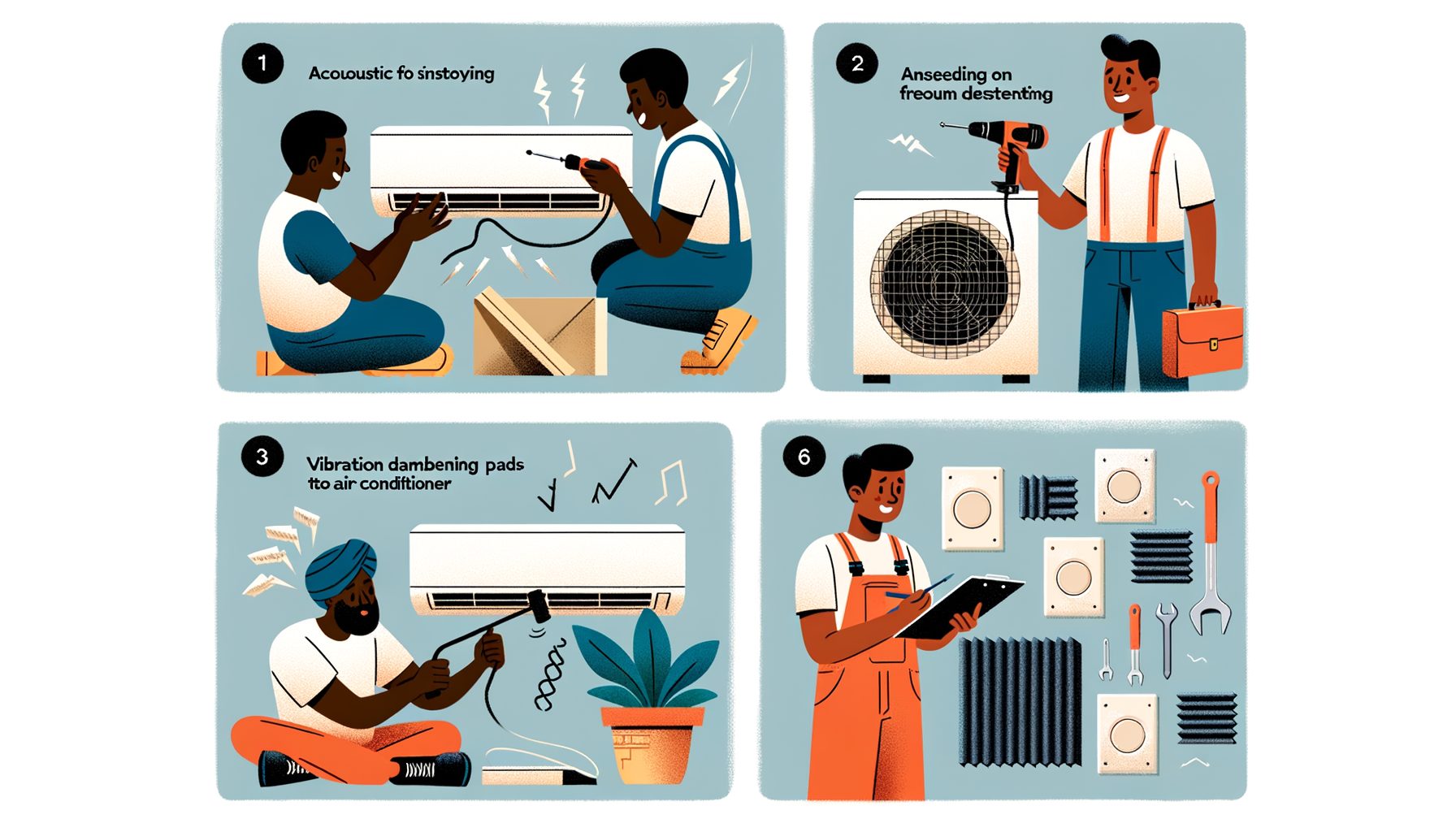
If your air conditioner roars, rattles, or hums like a generator, you’re not alone. Many homes and apartments battle AC noise that disrupts sleep, drowns out conversations, and even annoys neighbors. The good news: you can quiet a noisy air conditioner without sacrificing cooling performance. Here’s a guide that shows why ACs get loud, how to diagnose the root cause, and practical ways to soundproof an indoor or outdoor unit safely. Whether you rent a city apartment or own a suburban home, you’ll find smart, budget-aware solutions that reduce noise and keep your space cool and calm.
Why Your AC Is Loud: Diagnose Before You DIY
Before you spend money on soundproofing, identify what’s actually making noise. Different sounds point to different fixes. A low hum usually means the compressor or fan motor is transmitting vibration. A sharp rattling or buzzing can be a loose screw, warped fan blade, or the unit touching the window frame. A high-pitched whine could indicate a failing motor bearing. Wind-like whooshing often comes from restricted airflow, clogged filters, or undersized return vents making air rush faster than it should.
Start with a quick checklist. First, locate the source: is the noise from the indoor unit (window AC, portable, or mini-split head) or the outdoor condenser? Put your hand lightly on the casing—if the sound reduces, vibration is traveling into the structure. Next, check stability and level. Window units need to be slightly tilted outward for drainage but otherwise solid. Outdoor condensers must sit flat; an out-of-level pad makes the compressor work harder and louder. Tighten accessible screws and remove debris: pebbles, leaves, or ice can strike the fan. Examine the filter and coil cleanliness; dirt forces the fan to work harder, raising noise. For ducted systems, leaky or undersized ducts can amplify fan sound; a whistling return grill often signals a starved return.
Listen for patterns. Does the noise spike when the compressor starts? That’s a starting surge and vibration problem. Is it continuous, rising with fan speed? Focus on airflow and fan balance. Does it buzz at certain hours? Outdoor units can resonate with nearby structures—fences, deck rails, or metal downspouts—only when the compressor runs. Take notes, record a short video with audio, and compare before/after as you try steps in this guide. If you suspect electrical issues, burnt smells, or refrigerant leaks, stop and call a licensed HVAC pro. Soundproofing helps, but the quietest AC is one that’s correctly installed, balanced, and maintained first.
Quick, Low-Cost Fixes to Reduce AC Noise Today
Begin with simple tasks that deliver rapid, measurable noise reductions. Replace or wash filters monthly during peak cooling. A clean filter can lower fan workload and shave a few decibels off the whoosh. For window ACs, seal air gaps with closed-cell foam weatherstripping around the sleeve; even small leaks whistle. Add an insulating foam strip between the unit and the window sill or bracket to stop buzz transfer. If the accordion side panels rattle, secure them with painter’s tape or low-profile clips.
Address vibration. Place anti-vibration pads made of dense rubber or EVA foam under portable units and window AC support brackets. For outdoor condensers, swap brittle feet for new rubber isolation mounts. If your condenser sits directly on concrete, consider an equipment pad or even a bed of compacted gravel to decouple vibration. Ensure all panels and fan guards are snug; a quarter turn on a loose screw often silences metallic rattles. If you hear a periodic clank, power off and inspect the fan for bent blades or contact with shrouds; minor bends can cause major noise and should be corrected or replaced by a pro.
Improve airflow. Open supply registers fully and don’t block return vents with furniture. A clogged indoor coil can sound like wind in a cave; having it cleaned during routine maintenance reduces both noise and energy use. For portable ACs, shorten and straighten the exhaust hose; kinks and long runs raise static pressure and noise. On mini-splits, set “quiet” or “low” fan modes at night; inverter-driven systems are most efficient at steady, lower speeds and are quieter there too.
As a final quick win, try behavioral tweaks. Pre-cool rooms before bedtime so the system can run at lower speeds overnight. Use smart scheduling to avoid peak compressor noise during calls or streaming times. These steps often deliver 3–7 dB of improvement—enough to turn an annoying hum into background ambience—without major expense.
Soundproofing Strategies for Indoor Units (Window, Portable, Ductless)
Once the basics are handled, targeted soundproofing for indoor units can make a big difference. The goal is to block, absorb, and decouple noise without suffocating airflow or violating safety rules.
Window ACs: treat the window opening like a leaky instrument. Seal between the unit chassis and window frame using foam weatherstripping and a rigid support bracket so the weight isn’t flexing the sash. Add a thin neoprene or cork gasket under contact points to decouple vibration from the sill. Replace lightweight accordion side panels with insulated, cut-to-fit rigid foam boards wrapped in vinyl or MLV (mass-loaded vinyl) for better sound blockage; ensure the drain angle and louvers remain clear. Hang thick, tightly woven curtains or an MLV-backed curtain over the window at night. It won’t block the grille but damps sound reflecting into the room. If the window vibrates, a small bead of clear silicone at the glass-to-frame seam can stop the buzz.
Portable units: noise often travels through the exhaust hose and the drafty window kit. Upgrade to an insulated hose cover to damp fan and airflow noise. Make sure the window kit is sealed with foam tape around the perimeter. Place the unit on a dense rubber mat to reduce structural transmission. Keep the hose run short and straight, and avoid sharing an outlet with sensitive audio gear to minimize electrical hum.
Ductless mini-splits: the indoor head is already engineered for low noise, but installation matters. If the mounting plate is on a hollow drywall section without studs, resonance can amplify sound. Re-mount to hit at least one stud, add neoprene spacers, and ensure refrigerant lines aren’t rattling inside the wall chase. Set the unit to “quiet” mode in bedrooms and ensure the coil and blower wheels are clean. If the room echoes (bare walls, hard floors), add soft furnishings or acoustic panels opposite the unit; absorption reduces perceived loudness without touching the AC.
Key rule: never block the intake or supply louvers. Sound-absorbing materials must be placed around—not in front of—air paths. Properly executed, indoor soundproofing can deliver a 4–10 dB reduction, particularly by sealing gaps, decoupling vibration, and adding mass to weak points like window inserts.
Soundproofing an Outdoor Condenser Without Blocking Airflow
The outdoor unit (condenser or heat pump) contains the compressor—a primary noise source. You can meaningfully reduce sound outdoors and indoors by isolating vibration and creating a smart barrier that maintains ventilation. Start with the base: the condenser should sit level on a stable pad. Old, hard feet transmit vibration into the slab and your home’s structure. Replace them with rubber isolation mounts and, if feasible, set the unit on a composite or concrete pad supported by compacted gravel. Make sure refrigerant lines are cushioned where they touch walls or brackets; foam pipe insulation and rubber-lined clamps prevent metal-on-metal resonance.
Then, consider a manufacturer-approved compressor sound blanket—an insulated wrap designed for your specific model. Such a blanket can shave a few decibels off compressor hum without overheating, provided it doesn’t block service valves or airflow. Only use blankets vetted by the manufacturer or a pro. For barriers, build a ventilated, mass-rich screen around the unit. Materials like tongue-and-groove wood with interior MLV layers, fiber-cement panels, or a staggered-slat cedar fence can block line-of-sight noise while letting air pass. Maintain clearances per your manual (typically 30–60 cm/12–24 inches on sides and 150–200 cm/5–7 feet above, but always verify). Plant dense shrubs as a second acoustic layer, keeping at least 60–90 cm/2–3 feet of space so leaves don’t choke airflow. Avoid solid, fully sealed boxes—those trap heat and can void warranties.
Schedule preventative maintenance. A clean condenser coil and properly charged system run quieter. If the fan blade is imbalanced, a tech can replace it inexpensively. Tighten access panel screws and add thin neoprene washers under panels that vibrate.
Here are typical results and costs for outdoor-noise fixes. Real-world performance varies with model, yard acoustics, and distance to neighbors.
| Method/Material | Use Case | Typical Cost (USD) | Estimated dB Reduction | Notes |
|---|---|---|---|---|
| Rubber isolation feet + level pad | General vibration control | 25–150 | 3–7 dB | Immediate, low-risk; re-level annually if soil settles |
| Compressor sound blanket (OEM-approved) | Compressor hum | 80–200 | 3–6 dB | Use model-specific or pro-recommended blankets only |
| Ventilated noise screen/fence with mass | Line-of-sight blocking | 150–800 | 5–10 dB | Maintain clearances; staggered slats improve airflow |
| Line-set cushioning and clamps | Pipe rattle/resonance | 10–40 | 2–4 dB | Stops metallic buzzing into walls |
| Professional coil cleaning/tune-up | Fan noise, efficiency | 100–250 | 2–5 dB | Also lowers energy use |
These measures stack. Combining isolation feet, a ventilated noise screen, and a tune-up often yields the most noticeable reduction while keeping the system safe and efficient.
Pro-Level Upgrades, Maintenance, and When Replacement Makes Sense
Sometimes the quietest fix is a smarter system. If your AC is 10–15 years old, upgrading to an inverter-driven (variable-speed) unit can cut noise dramatically. Variable-speed compressors and fans ramp gently, avoiding the loud on/off cycling of single-stage systems. Many modern ductless and central systems list sound ratings under 55 dB outdoors and under 30 dB for indoor heads at low speed. When comparing models, look for manufacturer sound ratings and consider features like night/quiet mode and soft-start inverters that reduce startup thump.
Before replacement, try pro maintenance. A qualified technician can balance or replace a fan, tighten motor mounts, add appropriate acoustic liners in return plenums, and check static pressure so fans don’t work noisily against restrictions. Duct improvements—adding a larger return, sealing leaks with mastic, and adding lined flex only where appropriate—reduce turbulence and fan noise at the source. If you have a furnace/air handler combo, an ECM (electronically commutated motor) upgrade can run quieter at modulated speeds.
What about internal soundproofing? In ducted systems, a pro may line metal ducts near the air handler with UL-rated acoustic liner and install vibration isolators between the unit and framing. For mini-splits, a line-set reroute with better isolation and a wall bracket with rubber bushings can solve persistent resonance. Avoid DIY modifications inside sealed refrigeration circuits; refrigerant handling requires certification. Also, don’t add foam inside equipment cabinets unless it is fire-rated and approved by the manufacturer—unauthorized changes can raise temperatures and void warranties.
Finally, weigh cost vs. benefit. If your condenser sits under a bedroom window or a neighbor’s patio, the decibel impact is magnified. A mid-tier inverter unit plus a thoughtful noise screen may deliver both comfort and neighborly peace. Check local rebates and efficiency incentives; quieter, high-SEER equipment often qualifies. Document your current noise with a smartphone sound meter app, then re-measure after upgrades to confirm results and protect your investment.
FAQs
How many decibels is a typical air conditioner?
Window units often run 50–60 dB indoors on low to medium. Modern mini-split indoor heads can be under 30 dB on quiet mode. Outdoor condensers commonly range 55–70 dB at 1 meter, depending on model and speed.
Will a solid box around my outdoor unit make it quiet?
Avoid solid boxes. They trap heat and restrict airflow, risking damage and higher noise. Use ventilated barriers with gaps and maintain manufacturer clearances.
Do sound blankets over compressors cause overheating?
Use only model-specific or professionally recommended blankets that leave airflow paths and service areas clear. When installed correctly, they’re widely used to curb compressor hum safely.
Is acoustic foam good for AC noise?
Acoustic foam absorbs echo but doesn’t block sound well. For blocking, you need mass (like MLV or dense panels). Foam is fine on room walls opposite the unit, not on or in the unit itself.
When should I call a pro?
If you hear grinding, electrical buzzing, smell burning, see ice buildup, or if noise persists after basic steps, call an HVAC technician. Also involve a pro for fan balancing, refrigerant issues, or duct modifications.
Conclusion: Make Your AC Quiet—Safely, Efficiently, and For Good
Here’s the bottom line: the fastest way to quiet AC noise is to fix the source, then add smart soundproofing that respects airflow. You learned how to diagnose hums, rattles, and whooshes; apply quick wins like sealing gaps, cleaning filters and coils, and isolating vibration; and then layer solutions for indoor and outdoor units—from window inserts and MLV-backed curtains to ventilated condenser screens and compressor blankets. With a bit of testing and the right materials, most homes see a meaningful 4–10 dB reduction, which feels like cutting loudness roughly in half to the human ear.
Now it’s your turn. Spend 10 minutes today on the basics: clean or replace your filter, tighten loose screws, add foam weatherstripping where you see light, and set a reminder to schedule a professional tune-up. If your noise comes from the outdoor unit, install rubber isolation feet and sketch a simple, ventilated screen with proper clearances. Track results with a free phone dB meter app so you know what works before investing more. If your system is aging, price out an inverter upgrade and look for rebates—you might gain peace, efficiency, and lower bills in one move.
Quiet comfort is not a luxury; it’s an achievable standard. Start small, be consistent, and let evidence guide your next step. Your sleep, your calls, and your neighbors will notice. Ready to make your space calm and cool? Pick one action from this guide and do it today. What’s the first noise you’ll tackle—the hum, the rattle, or the whoosh?
Helpful resources and further reading:
– CDC: What Noises Cause Hearing Loss? https://www.cdc.gov/nceh/hearing_loss/what_noises_cause_hearing_loss.html
– ENERGY STAR Room Air Conditioners: https://www.energystar.gov/products/air_conditioners_room
– ASHRAE Position Document on Sound and Noise: https://www.ashrae.org/file%20library/about/position%20documents/ashrae-position-document-on-sound-and-noise.pdf
– EPA on Noise Pollution: https://www.epa.gov/air-research/noise-pollution
– WHO Environmental Noise Guidelines (Europe): https://www.who.int/europe/publications/i/item/9789289053563
– Example of Manufacturer Sound Blanket Accessory (consult your model): https://www.rheem.com
Sources
– Manufacturer installation manuals and sound ratings (Carrier, Daikin, Mitsubishi Electric, Rheem, Trane)
– ASHRAE Handbook—HVAC Applications: Sound and Vibration (overview)
– CDC and WHO guidance on environmental noise exposure
– Field experience from residential HVAC maintenance and common retrofit practices