
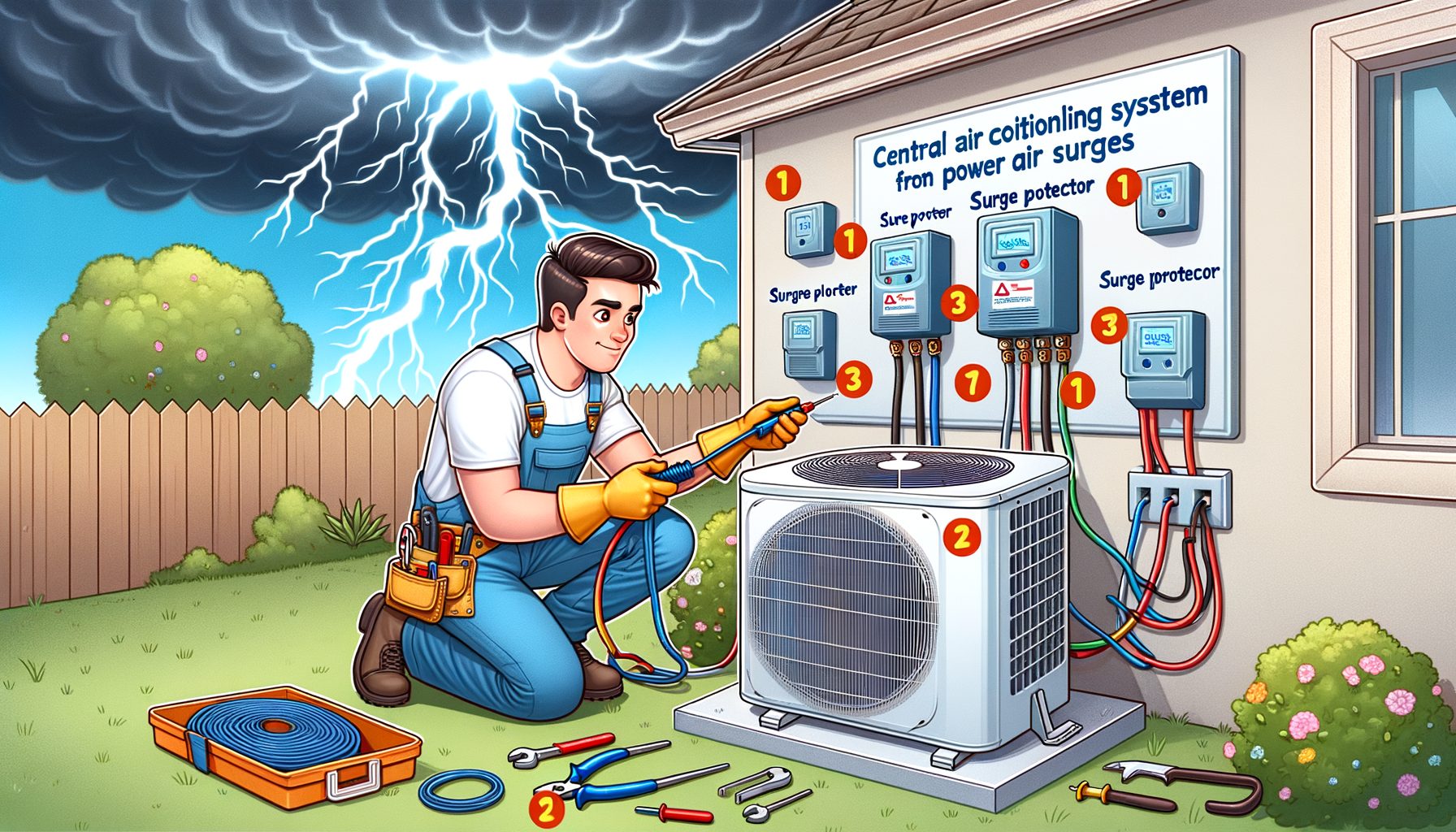
Power surges don’t send a warning—they hit suddenly, and your air conditioner takes the blow. Wondering how to protect your air conditioner from power surges already puts you ahead of most homeowners and renters. The issue is straightforward yet serious: unstable electricity from lightning, outages, generator switching, or faulty wiring can zap the sensitive electronics inside modern AC units, especially inverter models. The good news lands on your side. With a few smart choices and low-effort habits, you can slash risk, dodge costly repairs, and stay cool without worry.
The real problem: power surges silently kill AC units
Many people assume AC units fail only because they’re old or dirty. Partly true, but not the whole story. Another hidden culprit is electrical stress—short, sharp voltage spikes known as surges. Modern air conditioners, particularly inverter and variable-speed systems, lean on circuit boards, sensors, and microprocessors. Those parts deliver efficiency and quiet operation, yet they’re fragile under surge conditions. A single strong spike can punch through insulation, burn PCB traces, or weaken components that later fail without warning.
Where do surges originate? Lightning grabs headlines, yet it isn’t the only source. Utility switching, grid instability during heatwaves, sudden power restoration after an outage, and even large appliances cycling within your home can create brief overvoltage events. What’s interesting too, a significant share of surges occur inside buildings—refrigerator compressors, pumps, or welders can cause micro-surges that slowly wear down electronics. In practical terms, your AC might endure countless small hits all year and one major shot during a storm.
Why care? Repairs add up fast. A control board swap can run the price of a mid-range smartphone, while a damaged inverter module hits much harder. In the worst cases, a failed compressor becomes a multi-thousand-dollar choice: repair or replace the system. Renters face downtime and hassle; owners face an unexpected budget punch.
Preventable? Absolutely. Adopt a layered surge strategy, verify grounding and wiring, and make a few setup tweaks—like adding a time-delay restart device—to knock down risk dramatically. Think of it as strapping a helmet on the priciest summer appliance you own.
Common surge scenarios at a glance
| Source | Typical Scenario | Risk Level to AC | Notes |
|---|---|---|---|
| Lightning (nearby) | Storms, seasonal weather spikes | Very High | May induce high-voltage transients through power and ground |
| Utility switching / outages | Power restored after blackout | High | Sudden voltage return can cause damaging overvoltage |
| Large appliances | Motors starting/stopping at home | Medium | Frequent small surges add long‑term stress to electronics |
| Generator or inverter transitions | Switching between power sources | Medium–High | Poor transfer timing leads to spikes or sags |
| Poor grounding/bonding | Old or damaged wiring | High | Even quality SPDs underperform without solid grounding |
What kind of protection do you actually need? A quick breakdown
Not every “surge protector” is created for HVAC duty, and a cheap power strip won’t defend an air conditioner. Aim for layers: intercept big surges at the service, clamp leftovers near the equipment, steady the voltage if sags are common, and ensure safe restarts after outages.
1) Whole-home surge protector (Type 1 or Type 2 SPD). Installed at the main panel, this is the front line. Seek UL 1449–listed devices (Type 1/2) with solid surge current ratings—often 50–100 kA per phase for typical homes, depending on brand and region—and low let-through voltage. A licensed electrician should handle installation. It won’t stop every spike, but it absorbs the heavy blows so downstream protection has an easier job.
2) Dedicated AC surge protector (equipment-level SPD). Many HVAC brands sell or specify unit-level protectors mounted at the disconnect or inside the outdoor unit. Tuned for AC loads, they clamp residual surges that slip past the main SPD. Inverter systems gain the most, since their boards are both sensitive and pricey.
3) Voltage stabilizer/AVR (Automatic Voltage Regulator) where undervoltage is common. In areas with brownouts or wide swings, an AVR keeps the AC operating in a safer band. Choose a model sized for the unit’s amperage and start-up needs. For central systems, consult an electrician or HVAC pro for proper sizing; for window or split units, manufacturer-approved stabilizers are often available.
4) Time-delay restart/anti-short-cycle device. Inexpensive modules that delay the compressor restart after a power interruption. That brief pause—usually 3–5 minutes—prevents high inrush currents while pressures equalize, a moment when stress and failures soar. Many systems include it; adding one where it’s missing is cheap insurance.
5) Proper grounding and bonding. Surge devices only shine with a solid grounding system. Corroded connections, undersized electrodes, or broken bonds slash effectiveness. Have an electrician verify grounding impedance and correct issues before or during SPD installation.
6) UPS or line-interactive power for controls only (optional). For ductless mini-splits and smart thermostats, a small UPS can keep low-power controls alive during brief outages, preventing abrupt shutdowns and controller glitches. Do not attempt to power the compressor with a small UPS—reserve it for controls and networking gear only.
| Option | Typical Cost (varies by country) | Protection Focus | Pros | Considerations |
|---|---|---|---|---|
| Whole-home SPD (Type 1/2) | USD $150–$600 + installation | Big surges at service | Guards all circuits; strong first layer | Requires a licensed pro; not a full solution by itself |
| AC unit-level SPD | USD $50–$250 + installation | Residual surges | Targets sensitive HVAC electronics | Must match voltage/phasing; follow manufacturer guidance |
| AVR/Voltage stabilizer | USD $100–$500+ (size dependent) | Undervoltage/overvoltage | Improves reliability on unstable grids | Needs correct sizing; slight efficiency penalty |
| Time-delay restart | USD $15–$60 | Safe restarts | Cuts stress after outages | Often built into newer units |
| Grounding/bonding fix | Varies with home | System safety | Enables all protection to work better | May require inspection and upgrades |
When you shop, look for UL 1449 listings, surge current ratings suited to your environment, clear status indicators (so you know when protection is spent), and straightforward installation guidance. Brands such as Eaton, Leviton, Schneider Electric, and Siemens publish detailed SPD specs you can compare. Well, here it is: a little standards reading from industry bodies goes a long way before you buy.
Step-by-step action plan to safeguard your AC today
Step 1: Assess your risk. Live in a storm-prone region? See frequent outages or voltage swings? On aging infrastructure? Answering yes means surge protection should move up your priority list.
Step 2: Check your grounding and wiring. Ask a licensed electrician to test the grounding electrode system, bonding, and panel connections. Effective surge protection depends on a low-impedance path to ground. Fix corrosion, loose neutrals, broken bonds, or undersized conductors first.
Step 3: Install a whole-home SPD. Have an electrician add a Type 1 or Type 2 SPD at the main panel or service disconnect, per local code. Choose a model with clear status lights. If a sub-panel feeds your outdoor HVAC equipment, discuss whether adding an SPD there makes sense.
Step 4: Add an equipment-level SPD for the AC. Mount an AC-specific SPD at the disconnect or per manufacturer instructions. Match your system’s voltage (e.g., 208/230V or 240V) and phase. Inverter systems benefit the most from this layer.
Step 5: Decide on voltage stabilization. If utility voltage often dips or spikes beyond nominal, consult your HVAC pro about an AVR sized for your AC. For window and split units, use manufacturer-approved stabilizers to avoid warranty conflicts.
Step 6: Include a time-delay restart. If your unit lacks anti-short-cycle protection, add a time-delay module set for 3–5 minutes. That setting reduces compressor stress after outages or quick flickers.
Step 7: Protect controls and smart gear. Rely on a small UPS for a smart thermostat or mini-split controller to keep settings intact during short outages and avoid abrupt resets. Limit UPS use to low-power electronics.
Step 8: Label, document, and monitor. Mark the panel with the SPD install date. Note model numbers and warranty terms. Make a habit of checking indicator lights monthly—if the protection light is off, replace the device.
Step 9: Storm and outage routine. Ahead of major storms, pre-cool the home slightly, then consider turning the AC off during the worst lightning if local guidance recommends it. After power returns, wait a few minutes before restarting; the time-delay device can handle that automatically.
Step 10: Review insurance and warranties. Some insurers offer discounts for surge protection or guidance on claims after electrical events. Keep receipts and installation photos. Check your AC warranty—many manufacturers prefer or require proper electrical protection.
Care, monitoring, and insurance: keeping protection working year-round
Protection isn’t “set and forget.” Think “set, then glance occasionally.” Surge protective devices use components (like MOVs) that wear out as they absorb energy. That’s normal behavior. Quality SPDs include indicator lights showing whether protection remains active. Add a quick check to your monthly routine—right alongside changing filters or wiping return grilles.
Seasonal checks: Before cooling season begins, clear debris around the outdoor unit and ensure the disconnect and SPD are secure and weather-protected. Verify intact insulation and look for any signs of overheating. After a severe storm, inspect sooner. If indicator lights suggest failure, replace the SPD promptly—cheaper than repairing damage after the next surge.
Smart monitoring: Consider a plug-in energy monitor or a panel-level smart meter that logs voltage events. Not required, but incredibly useful. Data on sags, swells, or flickers helps you and your electrician plan upgrades. Then this: larger homes or home offices may benefit from line-interactive systems that correct sags for sensitive electronics (controllers, routers), improving uptime.
Generator and inverter best practices: If you run a standby generator, size and configure it for your AC’s starting current. Use a proper automatic transfer switch to avoid cross-connection and transition spikes. For portable generators, never backfeed and use approved interlocks or transfer mechanisms—safety and code compliance matter as much as surge control.
Insurance and documentation: Keep a simple file—photos of installed SPDs, model/serial numbers, invoices, and your electrician’s contact. After a major electrical event, that record helps with claims and speeds troubleshooting. Some SPD makers offer connected equipment warranties; read the fine print, register devices if required, and save proof of proper installation. The small effort up front can pay off when it counts.
Finally, a maintenance mindset: Just as you clean filters and schedule annual HVAC service, treat surge protection as part of system health. A sturdy setup—whole-home plus AC-level SPD, solid grounding, and a restart delay—lets you ride out rough grid days with fewer worries and lower long-term costs.
FAQ: Fast answers about protecting your AC from power surges
Do inverter air conditioners need surge protectors?
Yes—arguably more than fixed-speed units. Inverters rely on sophisticated electronics to modulate compressor speed for efficiency and comfort, and those boards are sensitive to both large spikes and repeated small surges. A whole-home SPD paired with an equipment-level protector offers the best balance of cost and protection.
Will a power strip protect my air conditioner?
No. Typical power strips—and many “surge” extension cords—are not designed for high-current loads like AC compressors, and their components are often undersized. They can also be unsafe when feeding heavy appliances. Use properly rated, permanently installed surge protection and follow your AC manufacturer’s electrical requirements.
Should I use a UPS for my air conditioner?
Not for the compressor. Standard UPS units can’t handle AC starting currents or continuous load. A small UPS does help low-power controls like smart thermostats, Wi‑Fi bridges, or mini-split controllers, keeping settings intact during brief outages and preventing abrupt resets.
How do I know if a surge damaged my AC?
Clues include breakers tripping right after a storm or outage, a dead control panel, strange error codes, or an outdoor unit that won’t start even though you hear clicks. Sometimes the failure is delayed: a weakened component can die days or weeks later. If you suspect surge damage, call a qualified technician and mention recent electrical events. Also check the SPD indicator—if it shows “protection lost,” take that as a warning.
Is a voltage stabilizer the same as a surge protector?
No. A stabilizer (AVR) corrects sustained low or high line voltage, while a surge protector clamps short, sharp spikes. In unstable grids, both may be warranted: the AVR for daily swings and SPDs for fast transients. Always size and install per code and manufacturer instructions.
Conclusion
Protecting your AC from power surges doesn’t have to be complicated or expensive, and the payoff is real: fewer breakdowns, longer equipment life, and calmer storm days. We’ve covered the core problem—surges from lightning, grid events, and even your own appliances—and why modern AC electronics are especially vulnerable. Then we mapped a clear, layered solution: a whole-home SPD for the big hits, an equipment-level protector for the AC itself, solid grounding so protection actually works, an optional AVR where voltage is unstable, and a time-delay restart to avoid hard restarts. Round it out with simple habits—check indicator lights, inspect wiring seasonally, and document installations for insurance—and you’ve turned a hidden risk into a managed one.
Your next step is simple: schedule an electrician to evaluate grounding and install a UL 1449–listed whole-home surge protector. Ask about an AC-specific SPD and confirm whether anti-short-cycle protection is present. If brownouts plague your area, discuss an appropriately sized AVR. In a single visit, you can remove a major source of HVAC stress and future repair costs.
Take action today so you can relax tomorrow: keep cool, save money, and stop worrying when the lights flicker. Ready to make your system storm-ready—and stress-free? Which protection layer will you add this week?
Helpful resources and further reading
- U.S. Department of Energy – Central Air Conditioning Basics
- NIST – Surges in Homes: What They Are and How to Protect Against Them
- UL – UL 1449 Overview for Surge Protective Devices
- NFPA – Lightning Safety Basics
- ENERGY STAR – Maintain Your HVAC Equipment
- Eaton – Surge Protection Devices
- Schneider Electric – Surge Protection Guide
Sources
– NIST, Surges in Homes: What They Are and How to Protect Against Them (overview and consumer guidance).
– UL, UL 1449 Standard for Surge Protective Devices (device classification and safety).
– NFPA lightning safety resources (context for storm-related risks).
– ENERGY STAR and U.S. DOE (general HVAC maintenance and reliability practices).
– Manufacturer technical sheets (Eaton, Schneider Electric, Leviton, Siemens) for SPD ratings and application notes.